How Content Marketing Improves SEO
How strategic content creation strengthens your SEO through keyword targeting, topical authority, backlink acquisition, and user engagement signals.
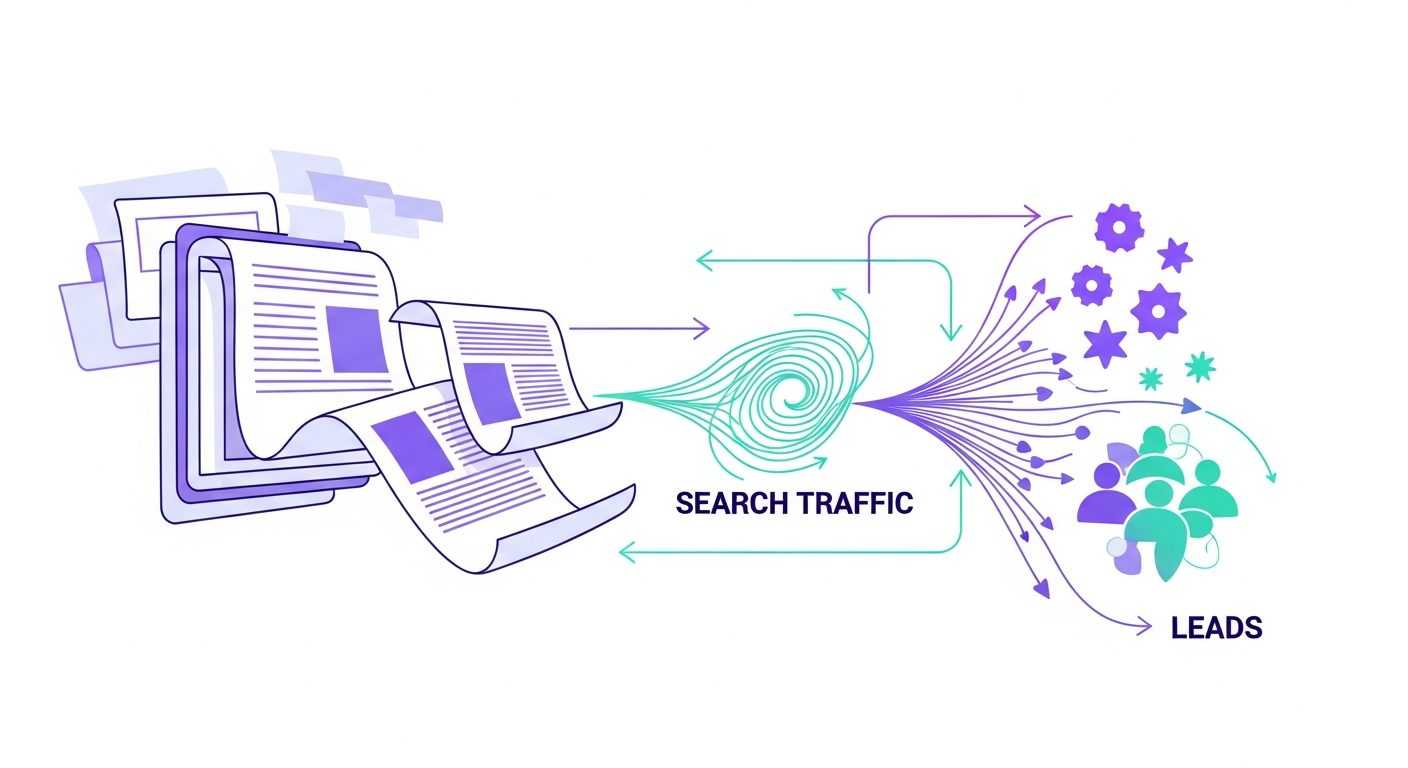
Content marketing and SEO are deeply interconnected. Without quality content, there's nothing for search engines to rank. Without SEO, even the best content remains invisible. When these two strategies work together, they create a powerful system for attracting organic traffic, building authority, and generating leads.
For Atlanta businesses looking to improve their search rankings, content marketing isn't optional — it's the foundation that every other SEO strategy builds upon. This article explains how content marketing directly improves your SEO performance and provides a practical framework for creating content that ranks.
What Content Marketing Is
Content marketing is the strategic creation and distribution of valuable, relevant content to attract and engage a target audience. Unlike traditional advertising that interrupts people with promotional messages, content marketing provides genuinely useful information that your potential customers are actively seeking.
For businesses, content marketing takes many forms: blog articles, service pages, FAQs, guides, case studies, infographics, videos, and more. The common thread is that each piece of content addresses a question, problem, or need that your target audience has. By providing value first, you build trust and credibility that ultimately drives business results.
From an SEO perspective, content is the vehicle that carries your keywords, demonstrates your expertise, earns backlinks, and engages visitors. Every piece of content you publish is an opportunity to rank for new search queries and attract potential customers who are looking for information related to your products or services.
How Content Helps Search Engines Understand Your Website
Google's primary job is understanding what web pages are about and matching them to relevant search queries. Content is how you communicate to Google what your business does, what topics you're an authority on, and what searches your website should appear for.
When you publish a comprehensive article about "local SEO strategies for Atlanta businesses," you're sending clear signals to Google: this website has expertise in SEO, it's relevant to Atlanta, and it can provide valuable information to people searching for these topics. The more high-quality content you produce around related topics, the stronger these signals become.
Google's Helpful Content System specifically rewards websites that produce content written primarily for people, not search engines. Content that demonstrates first-hand experience and expertise — what Google calls E-E-A-T (Experience, Expertise, Authoritativeness, Trustworthiness) — receives a ranking boost. This is where professional Atlanta SEO services can help businesses create content strategies that satisfy both user needs and algorithm requirements.
Keyword Targeting and Topic Clusters
Strategic content marketing organizes content around topic clusters — groups of related content that demonstrate comprehensive expertise on a subject. A topic cluster includes a pillar page (a comprehensive overview of a broad topic) and several cluster pages (articles that explore subtopics in depth), all linked together.
For example, an Atlanta law firm might create a pillar page about "personal injury law in Georgia" with cluster articles covering car accidents, slip and falls, workers' compensation, medical malpractice, and wrongful death. This topic cluster approach signals to Google that the firm has deep expertise across the entire personal injury landscape.
Each piece of content within a cluster targets specific keywords while supporting the broader topic. Long-tail keywords — longer, more specific phrases like "how to file a car accident claim in Atlanta" — often have less competition and higher conversion intent than broad terms. Building content around these specific queries captures traffic that generic pages miss.
Our guide to ranking higher on Google covers keyword research strategies that help you identify the most valuable terms for your content.
Content That Earns Backlinks
Backlinks remain one of the strongest ranking signals, and quality content is the most sustainable way to earn them. Certain types of content naturally attract links because they provide unique value that other websites want to reference:
- Original research and data: Studies, surveys, and data analyses that reveal new insights about your industry or local market. "2026 Atlanta Small Business Search Trends Report" would attract links from local media, business publications, and other marketing websites.
- Comprehensive guides: In-depth resources that serve as the definitive reference on a topic. Our complete guide to Atlanta local SEO is an example of this type of link-worthy content.
- Tools and calculators: Interactive content like ROI calculators, cost estimators, or assessment tools that provide personalized value to users.
- Expert roundups and interviews: Content featuring insights from recognized industry experts provides unique value and encourages those experts to share and link to the content.
The key to earning backlinks naturally is creating content that's genuinely useful, unique, and worth referencing. Generic, surface-level content rarely attracts links regardless of how well it's optimized.
Content and User Engagement
User engagement metrics — how people interact with your content once they land on your site — increasingly influence rankings. Google measures signals like time on page, pages per session, scroll depth, and bounce rate to assess whether users found your content valuable.
Content that keeps users engaged sends positive signals that boost rankings. This means your content needs to be well-structured (clear headings, short paragraphs, bullet points), visually appealing (images, charts, infographics), and substantive enough to keep readers scrolling rather than hitting the back button.
Internal linking within your content also improves engagement metrics. When an article links to related content on your website, readers who click those links increase pages per session and time on site — both positive engagement signals. Strategic internal linking transforms individual articles into an interconnected resource that keeps users exploring your website.
How Often Businesses Should Publish Content
The ideal publishing frequency depends on your resources, industry, and competition. However, consistency matters more than volume. Publishing one high-quality, comprehensive article per week is far more effective than publishing four mediocre posts.
For most Atlanta small businesses, publishing 2-4 quality blog posts per month provides a strong foundation for content-driven SEO growth. This pace allows time for thorough research, quality writing, and proper optimization of each piece while maintaining consistent publishing momentum.
Don't neglect content maintenance. Updating and refreshing existing content can be as valuable as creating new content. Google favors fresh, current information, and updating older articles with new data, expanded sections, and improved optimization can significantly boost their rankings. A combination of new content creation and existing content optimization is the most effective approach.
Frequently Asked Questions
What type of content is best for SEO?
The most effective content for SEO depends on your audience's search intent. For most businesses, a mix of long-form educational articles (1,500-3,000 words), service-specific landing pages, FAQ content, and locally relevant resources performs best. The key is creating content that thoroughly answers the questions your potential customers are asking.
How long does it take for content to rank in Google?
New content typically begins appearing in search results within days of being indexed, but reaching competitive positions usually takes 3-6 months. High-authority websites may see faster results, while newer sites may need 6-12 months for content to fully mature in rankings. Consistently publishing quality content accelerates this timeline.
Should I write content myself or hire a professional?
This depends on your expertise and available time. If you're a subject matter expert in your field, your unique insights can create exceptional content that generic writers can't replicate. However, professional content writers understand SEO best practices, can maintain a consistent publishing schedule, and know how to optimize content for both search engines and readers.
How important is content length for SEO?
Content length itself isn't a ranking factor, but comprehensive content tends to rank better because it covers topics more thoroughly, answers more questions, targets more keywords, and earns more backlinks. The ideal length depends on the topic and competition — analyze what's currently ranking and aim to be more comprehensive.
Conclusion
Content marketing is the engine that powers SEO success. It gives search engines the signals they need to understand and rank your website, provides the value that earns backlinks and engagement, and establishes the authority that separates top-ranking businesses from the rest.
Our Atlanta SEO company develops content strategies that align with your business goals and target the keywords that drive real results. From blog content creation to pillar page development, we help Atlanta businesses build the content foundation they need to dominate search results. Contact us to discuss your content strategy.
Ready to Get Found on Google?
Stop losing customers to competitors who rank higher. Get a free SEO audit and discover how to improve your local visibility and generate more leads from search.