
If you run a business in Atlanta, you already know how competitive the local market is. With over 6 million people in the metro area and thousands of businesses fighting for attention, standing out in Google search results is no longer optional — it's essential for survival. Whether you're a law firm in Buckhead, a plumber in Marietta, or a restaurant in Midtown, local SEO is the single most effective way to put your business in front of customers who are actively searching for what you offer. This guide, brought to you by Atlantaseo.agency, walks you through every step of the process — from claiming your Google Business Profile to building the kind of backlink profile that makes Google trust your website above all others.
What makes Atlanta's SEO landscape unique is the combination of a massive population, intense local competition, and a market that spans dozens of distinct neighborhoods and suburbs. A one-size-fits-all SEO strategy won't work here. You need an approach that accounts for Atlanta's specific geography, search patterns, and competitive dynamics. This guide provides that approach — a practical, step-by-step framework for dominating Google search in the Atlanta market.
Understanding Atlanta's Digital Landscape
Atlanta is the economic engine of the southeastern United States. The metro area is home to more than 6 million residents spread across Fulton, DeKalb, Cobb, Gwinnett, and dozens of other counties. This sprawling geography creates a unique search environment where local intent varies dramatically from one neighborhood to the next. Someone searching for "HVAC repair" in Sandy Springs has entirely different expectations than someone making the same search in Decatur or Newnan.
The city's digital maturity is above the national average. Atlanta ranks among the top ten metro areas in the United States for internet adoption and smartphone usage. Google's own data shows that 46% of all searches have local intent, and in a market as large as Atlanta, that translates to millions of local searches every single day. These aren't casual browsers — studies show that 76% of people who search for something nearby on their phone visit a related business within 24 hours, and 28% of those searches result in a purchase.
What this means for your business is clear: if you're not visible in local search results, you're leaving money on the table every single day. Your competitors who do invest in local SEO are capturing these customers instead. The good news is that most local businesses in Atlanta are still not optimizing effectively, which creates a significant opportunity for those who commit to a comprehensive SEO strategy.
Atlanta by the Numbers
- 6.2 million metro population across 29 counties
- Over 150,000 small businesses operating in the metro area
- 93% of Atlanta consumers use the internet to find local businesses
- The average Atlanta resident performs 3-4 local searches per day on mobile
Atlanta's economy is also remarkably diverse. Healthcare, technology, logistics, film production, real estate, legal services, and home services are all major sectors. Each industry has its own competitive landscape in search results. A personal injury attorney in Atlanta faces completely different SEO challenges than a roofing contractor in Alpharetta. Understanding your specific competitive environment is the first step toward building an effective SEO strategy.
The Atlanta market is also seasonal in ways that affect search behavior. HVAC companies see massive spikes in summer and winter. Tax preparers peak in Q1. Landscapers and roofers see spring surges. Understanding these seasonal patterns and planning your content and optimization efforts around them gives you an edge over competitors who treat SEO as a static, set-it-and-forget-it activity.
Google Business Profile: Your Most Important Local Asset
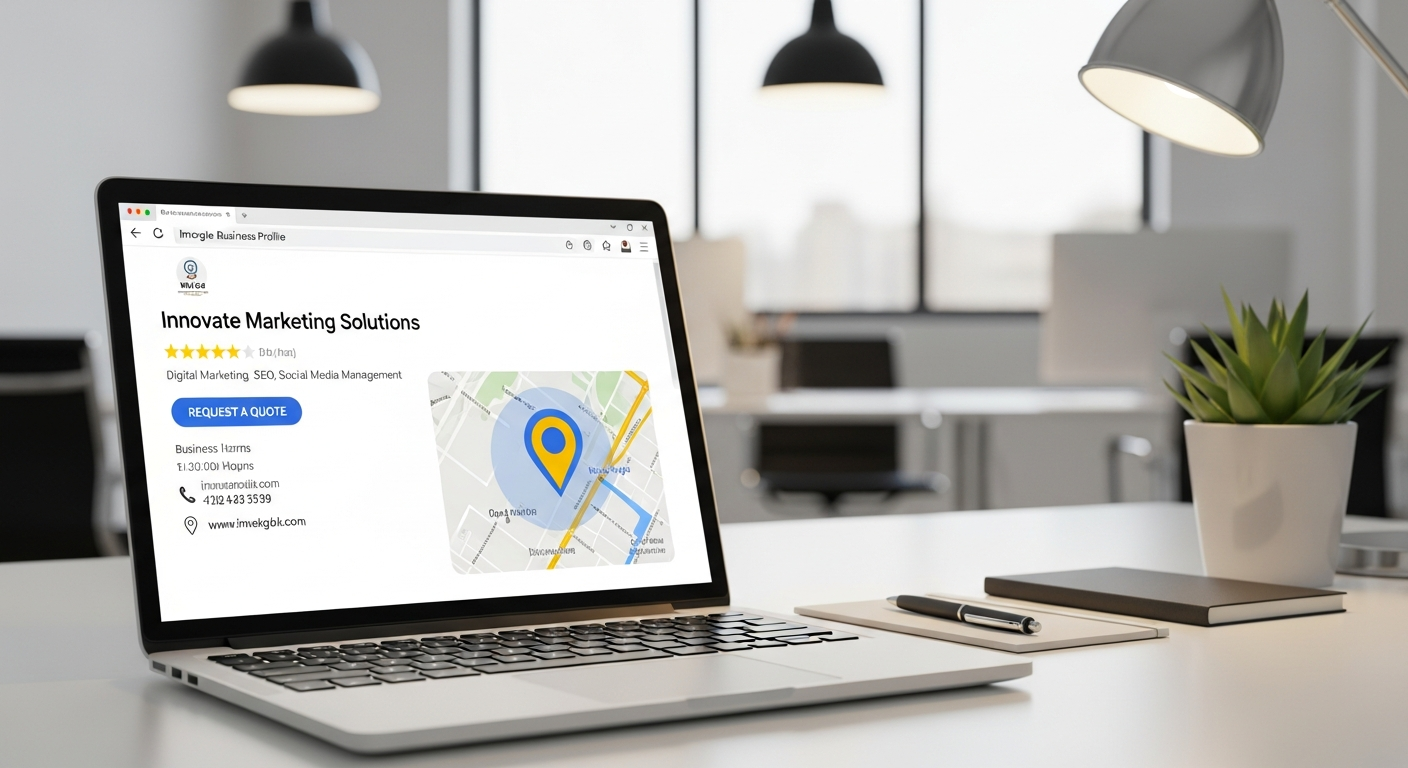
Your Google Business Profile (GBP) is arguably the single most important element of your local SEO strategy. It's what powers your appearance in the Google Local Pack — those three map-based results that appear at the top of almost every local search. Research consistently shows that the Local Pack captures 42% of all clicks on local search results pages. If you're not in those top three positions, you're invisible to nearly half of all local searchers.
Claiming and Verifying Your Profile
If you haven't already claimed your Google Business Profile, that's step one. Go to business.google.com and follow the verification process, which typically involves receiving a postcard at your business address with a verification code. If you have multiple locations throughout Atlanta, you'll need to verify each one separately. Google is increasingly offering phone and email verification for established businesses, which speeds up the process considerably.
Optimizing Every Field
Once verified, optimization begins with the basics. Your business name should match your official name exactly — don't stuff keywords into it, as Google penalizes this. Your primary category selection is critical. Choose the most specific category available. If you're a personal injury attorney, select "Personal Injury Attorney" rather than the broader "Law Firm." You can add up to nine additional categories to capture related searches.
Your business description should be 750 characters of compelling, keyword-rich copy that tells both Google and potential customers exactly what you do and where you do it. Mention Atlanta and your specific service areas naturally. Include your primary services and any unique selling propositions. This description won't directly rank you, but it helps Google understand your business relevance for specific queries.
Hours of operation, service area, appointment links, attributes (like "women-owned," "veteran-led," or "free estimates") — fill in everything Google offers. Profiles with complete information rank higher than incomplete ones. Google has stated this directly: businesses with complete and accurate information are easier to match with the right searches.
Photos and Visual Content
Photo optimization is an overlooked ranking factor. Google says businesses with photos receive 42% more requests for directions and 35% more click-throughs to their website than those without. Upload high-quality photos of your storefront, interior, team, and products or services. Geo-tag your photos with Atlanta-area coordinates before uploading. Add new photos regularly — Google favors active, frequently updated profiles.
Google Posts
Google Posts are a free way to share updates, offers, events, and news directly on your Business Profile. They appear in your Knowledge Panel when someone finds your business. Post at least weekly. Include a clear call-to-action, relevant images, and keywords naturally. Posts expire after seven days (except event posts), so consistency is key. Businesses that post regularly see improved engagement metrics, which indirectly support local rankings.
Local Keyword Research for Atlanta Businesses
Keyword research is the foundation of every SEO decision you'll make. For Atlanta businesses, this means understanding not just what people search for, but how they phrase their searches with local intent. The difference between ranking for "plumber" (a national, informational query) and "emergency plumber Sandy Springs" (a high-intent local query) is the difference between wasted effort and qualified leads walking through your door.
Understanding Search Intent
Every search falls into one of four intent categories, and understanding these is crucial for choosing the right keywords:
- Informational: "How much does a roof replacement cost in Atlanta?" — The searcher wants knowledge, not necessarily a vendor yet.
- Navigational: "Atlanta SEO Agency website" — The searcher is looking for a specific business.
- Commercial Investigation: "Best divorce attorneys in Atlanta reviews" — The searcher is comparing options and getting close to a decision.
- Transactional: "Emergency AC repair near me" — The searcher is ready to hire right now.
Your SEO strategy should include keywords across all four categories, but your service pages should target commercial and transactional keywords — those are the ones that generate leads and revenue.
Atlanta-Specific Keyword Modifiers
Local keyword research requires understanding the geographic modifiers that Atlanta residents actually use. These include:
- City-level: "Atlanta," "Marietta," "Sandy Springs," "Alpharetta," etc.
- Neighborhood-level: "Buckhead," "Midtown," "Virginia-Highland," "Decatur"
- Region-level: "Metro Atlanta," "North Atlanta," "OTP" (Outside the Perimeter)
- Proximity: "near me," "close by," "in my area"
- State-level: "Georgia," "GA"
Keyword Formula for Atlanta Businesses
Combine your service with local modifiers to build your target keyword list:
[Service] + [Location] = Target Keyword
"personal injury lawyer" + "Atlanta" = "personal injury lawyer Atlanta"
"emergency plumber" + "Sandy Springs" = "emergency plumber Sandy Springs"
"best dentist" + "near me" = "best dentist near me"
Tools and Techniques
Start with Google's own tools. Google Keyword Planner (free with a Google Ads account) shows search volume estimates for any keyword. Google Search Console reveals the actual queries people use to find your existing pages. Google Trends shows how search interest changes over time, which is particularly useful for seasonal businesses in Atlanta.
Third-party tools like Ahrefs, SEMrush, and Moz provide deeper data including keyword difficulty scores, competitor analysis, and SERP feature analysis. These tools help you identify realistic opportunities — keywords where the competition is weak enough for your site to rank with reasonable effort.
Don't forget Google Autocomplete and "People Also Ask" boxes. Type your primary service into Google and see what suggestions appear. These are actual searches that real people make, and they often reveal long-tail opportunities that keyword tools miss. "People Also Ask" questions make excellent subheadings and FAQ content for your service pages.
On-Page SEO for Local Businesses
On-page SEO refers to the optimization you perform directly on your website pages. For Atlanta local businesses, this means creating pages that clearly signal to Google what you do, where you do it, and why you're the best choice for local searchers. Every page on your site should be optimized for a specific set of keywords while providing genuine value to visitors.
Title Tags and Meta Descriptions
Your title tag is the single most important on-page ranking factor. It's what appears as the clickable blue link in search results. For local businesses, your title tag formula should be: [Primary Keyword] in [Location] | [Brand Name]. For example: "Emergency Plumber in Sandy Springs | ABC Plumbing." Keep titles under 60 characters to avoid truncation.
Meta descriptions don't directly affect rankings, but they significantly impact click-through rates. A compelling meta description with a clear call-to-action can mean the difference between someone clicking your result or your competitor's. Include your location, primary service, and a reason to click — like "Free estimates" or "Available 24/7." Keep descriptions between 120-155 characters.
Header Structure (H1-H6)
Use a single H1 tag per page that includes your primary keyword and location. For a service page, this might be "Professional HVAC Repair in Atlanta, GA." Use H2 tags for major section headings and H3s for subsections. This hierarchical structure helps Google understand the organization and topics covered on each page. Your header structure should tell the story of your page even if someone only reads the headings.
Content Optimization
Each service page should contain at least 1,500 words of unique, valuable content. This isn't about stuffing keywords — it's about thoroughly covering your topic so that Google considers your page the best resource for the query. Include your target keyword in the first 100 words, then use it naturally throughout the content. Also use related terms, synonyms, and LSI (Latent Semantic Indexing) keywords to demonstrate topical depth.
For Atlanta businesses, weave local context into your content naturally. Mention specific neighborhoods you serve, reference local landmarks or events, discuss local building codes or regulations that affect your industry, and address regional-specific concerns. A roofer might discuss how Atlanta's summer storms affect roofing materials. A family lawyer might reference Georgia-specific custody laws. This local relevance signals to Google that your content is specifically relevant to Atlanta searchers.
Internal Linking
Internal links help Google discover and understand all the pages on your site. They also distribute ranking authority throughout your site. Link your service pages to each other where relevant. Link blog posts to service pages using descriptive anchor text. Create a hub-and-spoke content model where your main service pages link to detailed sub-topic pages and vice versa. This structure tells Google which pages are most important and how your content relates to itself.
On-Page SEO Checklist
- ✓ Unique title tag with primary keyword + location (under 60 chars)
- ✓ Compelling meta description with CTA (120-155 chars)
- ✓ Single H1 tag with primary keyword
- ✓ Logical H2/H3 header hierarchy
- ✓ 1,500+ words of unique, valuable content
- ✓ Keyword used naturally in first 100 words
- ✓ Local references woven throughout content
- ✓ Internal links to related service and location pages
- ✓ Optimized images with descriptive alt text
- ✓ Schema markup for local business
Technical SEO: The Foundation That Makes Everything Work
Technical SEO is the infrastructure that supports every other SEO effort. Without it, even the best content and link building strategies will underperform. For Atlanta businesses competing in local search, technical SEO ensures that Google can find, crawl, understand, and index every important page on your website quickly and accurately.
Site Speed and Core Web Vitals
Google has made page speed a direct ranking factor, and its Core Web Vitals metrics — Largest Contentful Paint (LCP), First Input Delay (FID), and Cumulative Layout Shift (CLS) — now directly influence your search rankings. The target benchmarks are: LCP under 2.5 seconds, FID under 100 milliseconds, and CLS score under 0.1.
For most Atlanta local business websites, the biggest speed killers are unoptimized images, bloated WordPress themes, too many plugins, and slow hosting. Start by compressing all images to WebP format, implementing lazy loading for below-the-fold images, minifying CSS and JavaScript, leveraging browser caching, and using a CDN. If your site is on shared hosting, consider upgrading to a VPS or managed WordPress hosting — the speed improvement alone can significantly impact rankings.
Mobile-First Indexing
Google now uses mobile-first indexing, meaning it primarily uses the mobile version of your website for ranking and indexing. If your site doesn't provide an excellent mobile experience, you're fighting with one hand tied behind your back. Ensure your site is fully responsive, buttons and links are easily tappable, text is readable without zooming, and no content is hidden on mobile that appears on desktop. Test your site with Google's Mobile-Friendly Test tool.
Crawlability and Indexation
Your robots.txt file tells search engines which pages to crawl and which to skip. Make sure you're not accidentally blocking important pages. Your XML sitemap should include all pages you want indexed and exclude pages you don't (like thank-you pages, admin pages, or duplicate content). Submit your sitemap through Google Search Console and monitor the Index Coverage report for any crawl errors.
Implement canonical tags on every page to prevent duplicate content issues. If you have location pages with similar content (like service descriptions for different Atlanta neighborhoods), canonical tags and unique content on each page are essential to avoid cannibalization. Use HTTPS throughout your site — Google has confirmed that HTTPS is a ranking signal, and Chrome flags non-HTTPS sites as "Not Secure," which erodes trust.
Schema Markup
Structured data (schema markup) helps Google understand the context of your content. For local businesses, implement at minimum: LocalBusiness schema with your name, address, phone number, hours, and service area; Service schema for each service you offer; FAQ schema for question-and-answer content; Review/AggregateRating schema for testimonials; and BreadcrumbList schema for navigation. Rich results generated by schema markup increase your SERP visibility and click-through rates.
Content Strategy for Atlanta Businesses

Content is the vehicle that carries your keywords, establishes your expertise, and gives other websites a reason to link to you. For Atlanta businesses, a strategic content plan means creating resources that serve your local audience while systematically building topical authority in your niche.
Service Pages
Every distinct service you offer should have its own dedicated page. Don't try to cover everything on a single "Services" page. A plumber should have separate pages for drain cleaning, water heater repair, sewer line services, leak detection, bathroom remodeling, and every other service they offer. Each page targets different keywords and captures different search queries. These pages should be comprehensive — 1,500 to 2,500 words — covering the service description, process, pricing information (at least ranges), FAQs, and a clear call-to-action.
Location Pages
If you serve multiple cities or neighborhoods in the Atlanta metro area, create unique landing pages for each location. A page targeting "HVAC repair in Alpharetta" should contain content specific to Alpharetta — mention local landmarks, reference the community, address location-specific concerns, and include driving directions or service area information. The key word here is unique. Don't just swap city names on a template page. Google is sophisticated enough to recognize thin, duplicated location pages, and they'll hurt rather than help your rankings.
Blog Content
A regularly updated blog serves multiple purposes: it targets informational and long-tail keywords that service pages can't, it demonstrates expertise that builds trust with potential customers, and it creates linkable assets that attract backlinks. Plan your content calendar around seasonal trends, common customer questions, and industry news.
For Atlanta businesses, locally relevant blog content performs especially well. Topics like "How Atlanta's Summer Heat Affects Your HVAC System," "Georgia's New Divorce Laws: What Atlanta Residents Need to Know," or "Best Neighborhoods in Atlanta for First-Time Homebuyers" attract local traffic and establish you as a local authority. These pieces also tend to earn links from local news sites and community organizations.
The Pillar Page Model
Organize your content using the pillar page model. Create comprehensive "pillar" pages for your main topics (2,500+ words covering a broad topic) and link them to detailed "cluster" pages that cover specific subtopics. For example, a law firm might create a pillar page on "Family Law in Atlanta" that links to cluster pages about divorce, child custody, alimony, prenuptial agreements, and adoption. This structure tells Google you have deep expertise in the topic and helps all related pages rank better.
Link Building in the Atlanta Market
Backlinks remain one of Google's top three ranking factors. They're essentially votes of confidence from other websites telling Google that your content is valuable and trustworthy. For Atlanta businesses, building high-quality, relevant links requires a combination of strategy, creativity, and genuine relationship building.
Local Link Opportunities
Atlanta offers an abundance of local link building opportunities that national businesses can't easily access. These include:
- Chambers of Commerce: The Metro Atlanta Chamber, Cobb Chamber, and Gwinnett Chamber all provide member directory listings with backlinks.
- Local News Sites: The Atlanta Journal-Constitution, Atlanta Business Chronicle, Patch.com, and neighborhood-specific publications like Decaturish and Sandy Springs Reporter all accept press releases, expert commentary, and contributed content.
- Business Associations: Industry-specific associations like the Georgia Association of Realtors or the Atlanta Bar Association provide member backlinks.
- Community Organizations: Sponsoring local events, sports teams, and charities often results in a backlink from the organization's website.
- Local Universities: Georgia Tech, Emory, Georgia State University, and Kennesaw State all have resource pages, scholarship listings, and internship boards that can provide .edu backlinks.
Content-Driven Link Building
The most scalable link building strategy is creating content that other websites naturally want to reference and link to. This includes original research and surveys (e.g., "Atlanta Small Business Confidence Survey 2026"), data visualizations and infographics, comprehensive guides and resources (like this one), free tools and calculators, and expert roundups featuring other Atlanta businesses. When you create genuinely valuable resources, outreach to relevant websites asking them to link becomes much easier because you're offering real value, not just asking for a favor.
Link Building Ethics
Avoid link schemes that violate Google's guidelines. This includes buying links, participating in link exchanges, using Private Blog Networks (PBNs), and any other tactic designed to manipulate PageRank. Google's Penguin algorithm is specifically designed to detect and penalize these practices. The short-term gain is never worth the risk of a manual penalty that can devastate your organic traffic overnight. Build links the right way — through relationships, great content, and genuine value.
Citations and Local Directories
Local citations are mentions of your business name, address, and phone number (NAP) on other websites. They're a fundamental local ranking factor because they help Google verify your business information and confirm your physical presence in Atlanta. Consistency is the key principle here — your NAP information must be identical across every citation.
Essential Directories
Start with the most authoritative directories and work your way down. Your priority list should include: Google Business Profile, Apple Maps, Bing Places, Yelp, Facebook Business, BBB (Better Business Bureau), Yellow Pages, Angi (formerly Angie's List), Thumbtack, HomeAdvisor (for service businesses), Healthgrades (for medical), Avvo and FindLaw (for attorneys), and industry-specific directories relevant to your niche.
NAP Consistency
Inconsistent NAP information confuses search engines and can actively harm your local rankings. Decide on one standard format for your business name, address, and phone number, and use it everywhere. If your business name is "ABC Plumbing LLC," don't list it as "ABC Plumbing" on one site and "A.B.C. Plumbing LLC" on another. Similarly, use the same address format, suite number conventions, and phone number format across all listings. Audit your existing citations using tools like Moz Local, BrightLocal, or Whitespark to identify and correct inconsistencies.
Atlanta-Specific Directories
Beyond national directories, list your business on Atlanta-specific platforms: the Atlanta Convention & Visitors Bureau, Atlanta Magazine's business listings, Discover Atlanta, the Atlanta Small Business Network, and neighborhood-specific directories for areas like Buckhead, Midtown, or Virginia-Highland. These local citations carry extra weight for local SEO because they reinforce your geographic relevance.
Reviews and Reputation Management
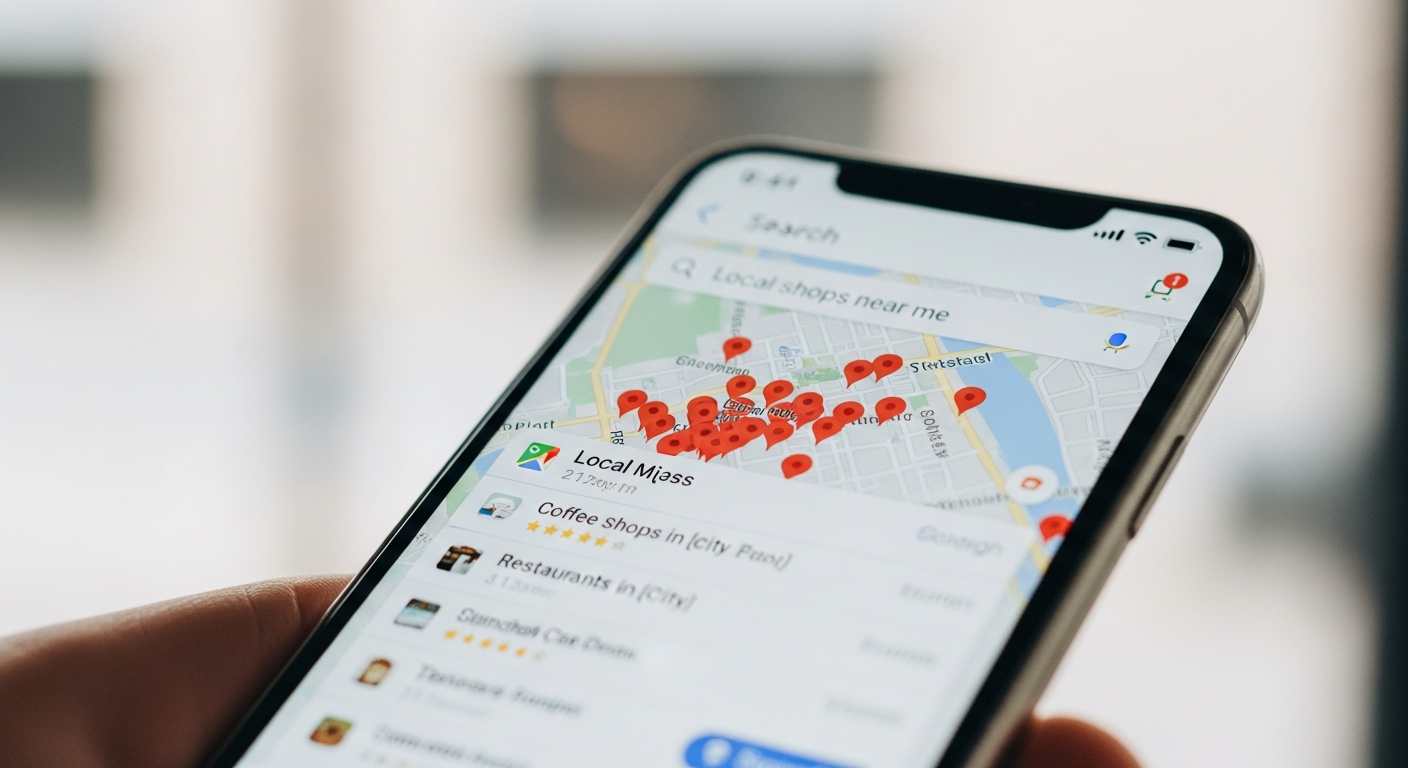
Online reviews are now a direct local ranking factor. Google has confirmed that "high-quality, positive reviews from your customers can improve your business visibility." But beyond rankings, reviews also determine whether someone clicks on your listing instead of a competitor's. A business with 150 reviews and a 4.8-star average will almost always outperform a competitor with 12 reviews and a 4.5-star average, even if the competitor ranks slightly higher.
Generating Reviews Systematically
The businesses that accumulate the most reviews don't do so by accident — they have systems in place. Create a simple process for requesting reviews after every successful interaction. This could be a follow-up email or text with a direct link to your Google review page, a QR code on printed materials that links directly to your review form, or an automated review request sequence in your CRM. The key is consistency: ask every customer, not just the ones you think will leave positive reviews.
Responding to Reviews
Respond to every review, positive and negative. For positive reviews, thank the customer specifically and reinforce what went well. For negative reviews, respond professionally, acknowledge the concern, offer to resolve the issue offline, and never get defensive or argumentative. Google has stated that responding to reviews shows that you value your customers, and it can improve your local search visibility. Potential customers also read your responses — how you handle criticism reveals your character as a business.
Diversifying Review Platforms
While Google reviews are the most important for local SEO, don't neglect other platforms. Yelp reviews appear in Apple Maps results. Facebook reviews influence social searchers. Industry-specific platforms like Avvo (for attorneys), Healthgrades (for doctors), and Houzz (for home services) carry weight with users searching on those platforms. A diversified review profile also looks more natural to Google.
Mobile Optimization: Where Atlanta Searches Happen
Over 60% of Google searches now happen on mobile devices, and for local searches, that number is even higher. When someone in Atlanta searches for "emergency dentist near me" at 10 PM, they're almost certainly on a phone. Your website must deliver a flawless mobile experience, or you'll lose these high-intent customers to competitors whose sites work better on small screens.
Speed on Mobile Networks
Mobile users are less patient than desktop users, and cellular connections can be slower than broadband. Google's research shows that 53% of mobile users abandon a site that takes longer than 3 seconds to load. Optimize aggressively: use next-gen image formats (WebP, AVIF), implement lazy loading, minimize JavaScript execution, and consider AMP for key landing pages if your content is primarily informational.
Tap-Friendly Design
Mobile design for local businesses must prioritize action. Your phone number should be tap-to-call enabled and prominently displayed. Your address should link to Google Maps directions. Forms should be short and use appropriate mobile keyboard types (numeric for phone fields, email for email fields). CTAs should be large enough to tap comfortably — Google recommends touch targets of at least 48x48 pixels with adequate spacing between them.
Mobile-Specific Features
Consider mobile-specific features that enhance the local user experience: click-to-call buttons that appear in the header or as floating elements, integrated maps showing your location, mobile-optimized booking or appointment forms, and prominent display of business hours and current open/closed status. These features reduce friction between search and conversion, which is especially important for urgent local searches.
Tracking and Measuring Your SEO Results
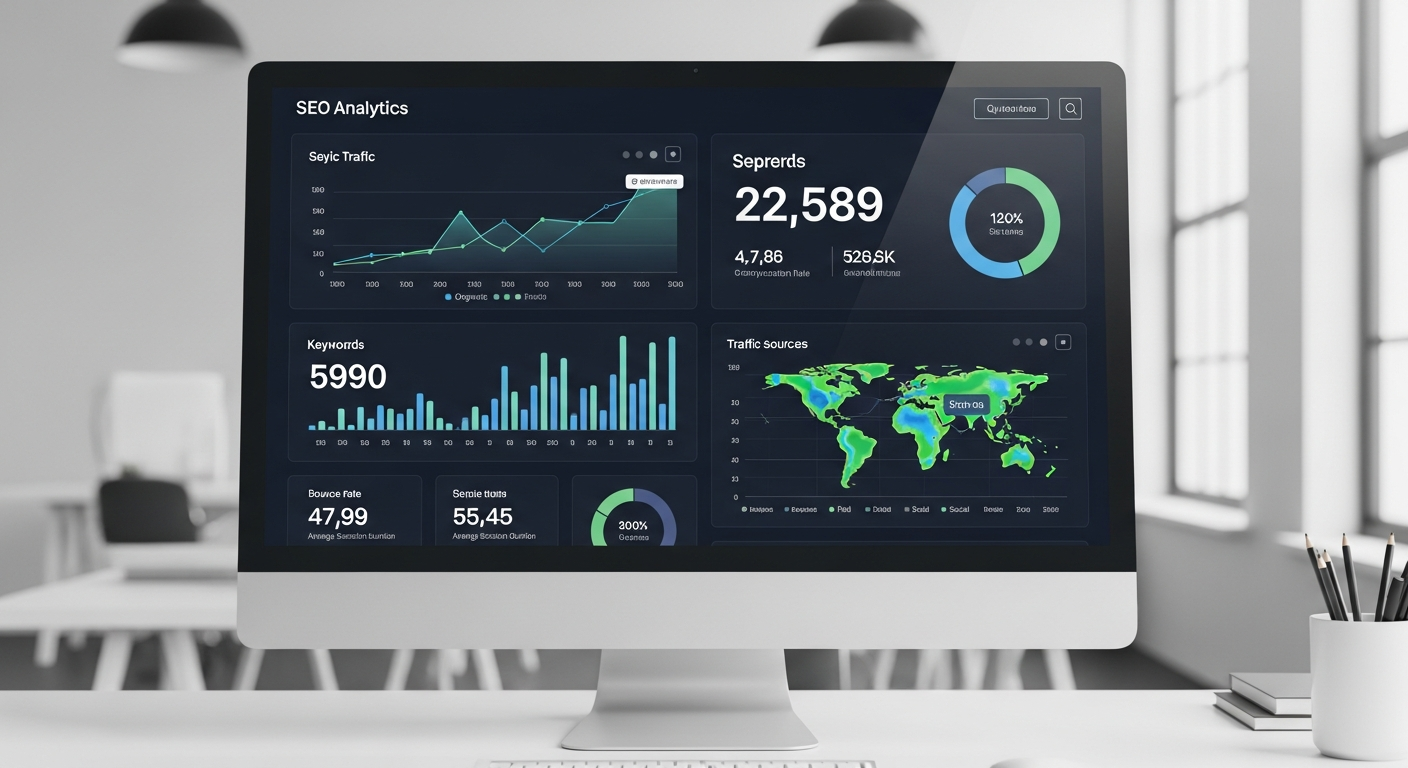
SEO without measurement is guesswork. You need to track specific metrics to understand what's working, what's not, and where to focus your efforts next. For Atlanta local businesses, the metrics that matter most are the ones tied directly to business outcomes — not vanity metrics like total impressions or raw traffic numbers.
Essential Tools
At minimum, set up Google Analytics 4 (GA4), Google Search Console, and a rank tracking tool. GA4 shows you who visits your site, what they do there, and whether they convert. Search Console shows you which keywords you rank for, how often you appear in results, and any technical issues Google discovers. A rank tracker (like Ahrefs, SEMrush, or BrightLocal) monitors your position for target keywords over time and shows your rankings in the Local Pack specifically.
KPIs That Actually Matter
Focus on metrics that connect to revenue:
- Organic traffic from Atlanta: Use GA4 to filter traffic by geographic location and monitor growth from your target metro area.
- Local Pack rankings: Track your position in the 3-pack for your top 20-30 target keywords.
- Phone calls from organic search: Use call tracking to attribute calls to organic search visits.
- Form submissions from organic: Set up conversion tracking in GA4 to count form fills from organic traffic.
- Google Business Profile actions: Monitor calls, direction requests, and website clicks from your GBP listing.
- Cost per lead from organic: Divide your SEO investment by the number of organic leads to calculate your cost per lead and compare it to other marketing channels.
Reporting Cadence
Review your core metrics weekly to catch any sudden changes or issues. Produce comprehensive monthly reports that track trends over time. Perform quarterly strategic reviews where you evaluate your overall SEO strategy, competitive landscape, and priorities for the next quarter. SEO is a long game — monthly fluctuations are normal, but quarterly trends should show consistent improvement if your strategy is sound.
Key Takeaways
Google Business Profile is Priority #1
A fully optimized GBP is the fastest path to appearing in the Local Pack, where 42% of local searchers click.
Target Local Keywords with Intent
Focus on keywords that combine your service with Atlanta-area locations and high purchase intent modifiers.
Create Comprehensive, Localized Content
Each service page needs 1,500+ words of unique content that weaves in Atlanta-specific context and local relevance.
Build Local Links and Citations
Earn backlinks from Atlanta organizations, news sites, and community groups. Keep NAP information consistent across all citations.
Generate and Manage Reviews Proactively
Develop a systematic process for requesting reviews and respond to every one — reviews are a direct local ranking factor.
Optimize Relentlessly for Mobile
Over 60% of local searches happen on mobile. Speed, tap-friendly design, and click-to-call functionality are non-negotiable.
Get Your Technical Foundation Right
Core Web Vitals, mobile-first indexing, HTTPS, schema markup, and proper indexation form the foundation that all other efforts build upon.
Measure What Matters
Track organic leads, Local Pack rankings, phone calls from search, and cost per lead. Let data drive your optimization decisions.
Conclusion: Your Roadmap to Local Search Dominance
Dominating Google search in Atlanta isn't a mystery — it's a process. The businesses that consistently appear at the top of local search results are the ones that invest in optimizing their Google Business Profile, create comprehensive and locally relevant content, build genuine backlinks from reputable sources, maintain consistent citation information, actively manage their online reputation, and track their results to continuously improve.
The Atlanta market is competitive, but it's also full of opportunity. Most businesses are still not executing on local SEO at a high level. By following the strategies outlined in this guide, you'll put yourself ahead of the vast majority of your competitors. SEO is a compounding investment — the work you do today will continue generating leads and revenue for months and years to come. Unlike paid advertising that stops the moment you stop paying, organic visibility builds upon itself over time.
If this guide has been helpful but you'd rather have experts handle the execution, the team at Atlantaseo.agency specializes in helping Atlanta businesses implement exactly these strategies. From technical SEO audits to comprehensive local SEO campaigns, we've helped over 150 Atlanta businesses grow their organic visibility and generate more leads from search. Whether you're just starting your SEO journey or looking to take your existing efforts to the next level, a data-driven local SEO strategy is the most reliable path to sustainable business growth in Atlanta's competitive market.